Mason R. Lukowski
Mokarran Industries is one person. This page exists so you know who that is before you decide whether to reply to an email.
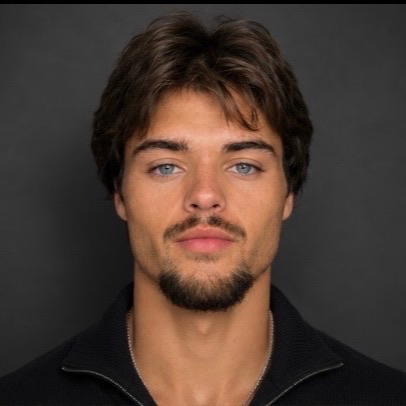
- Role
- Founder · Mokarran Industries LLC
- Location
- Charleston, South Carolina
- Company formed
- July 2026 · South Carolina LLC
- Focus
- Defense research and development: sensing and evaluation
- Contact
- mason@mokarranindustries.com
- linkedin.com/in/mason-lukowski
Background
I grew up in Walpole and Westwood, Massachusetts, spent my freshman year of college in San Luis Obispo, and have been in Charleston for about two years.
I didn't learn the ocean in Massachusetts. That happened on my first trip to Hawaii. I surfed for the first time there and never really came back. In my senior year of high school, I worked on a documentary about shark tagging in Turks and Caicos. Everyone on that boat could scuba dive except me; I have asthma, and I took it as settled that the water below the surface was not mine.
A woman aboard offered to teach me to freedive instead. We spent three hours on breathing technique, and by the end of the day I was holding my breath for a minute and a half at ten meters: no tank, no gauge, nothing between me and it. That is the closest I can get to explaining why this company is about sensing rather than platforms.
Before Mokarran, I ran a consumer-products business and then went on to build AI systems. The last of those watched other AI agents and flagged when they were going wrong: not whether they produced an answer, but whether the answer could be trusted. I have worked with these models for three years, intensively for the last one, and I have been using them since the first year they were public. Watching them improve from that distance has been a useful education in how they learn, and an even more useful one in how they fail. Mokarran is the same problem, applied to defense.
Defense runs through my family. A tree full of veterans, including a cousin who served as a Green Beret. I could not follow them. Asthma, a broken back, and a broken hip ruled out enlisting. That is twice the same body has shut the obvious door on something I wanted: first on the water, and then on service. And twice, the answer has been to look for the other way in. Building for the people who can go is the other way in.
I watched the new defense companies move fast, and wanted to build one that tries to break its results first.
I am 22, and Mokarran is what I do. It is not a first attempt: I ran a business before this one and have worked with AI models for three years. It is not a side project either, and the record on this site is kept so you can check that.
Why this company exists
Sensors exist. Models exist. The gap is the layer in between: the test that decides what a result actually is, and that says when it cannot tell. That is a measurement problem as much as a software one, and it is the one I want to work on.
Mokarran Industries is named for Sphyrna mokarran, the great hammerhead. The hammer is not a weapon. It is an antenna: the shark spreads its electroreceptors across that cephalofoil and sweeps the seafloor like a sensor array, finding prey it cannot see, buried under sand, by signal alone. The advantage goes to whoever senses best. That is the whole thesis of the company.
How I work
Test before trust, whatever the field. Before claiming that something works, I try to break it, and I report what the attempt returned, including when the answer is that it does not work.
The clearest example is the first real test I ran on acoustic target classification. It looked strong inside a single environment and then collapsed to chance the moment it was evaluated across environments. The honest reading was that the model had learned the environment, not the target, and the honest call was to stop. That result is published as Technical note 001.
What is actually built
- An acoustic classification test harness, including a cross-environment evaluation designed to catch the failure mode above rather than hide it.
- A physics-based echo simulator: modal-series scattering used to generate physically separable labelled data where no open real-world dataset exists.
- ODON-1: an earlier concept for an autonomous undersea vehicle, designed in-house. No hardware exists; it is a design study, not a product.
Current status
Mokarran Industries is early. No contracts, no hardware, no outside capital. Federal registration is complete, and the technical work above is the substance behind the claims on the rest of this site. I would rather say that plainly here than have you find it out later.
← Mokarran Industries